

The emerging story of Botswana

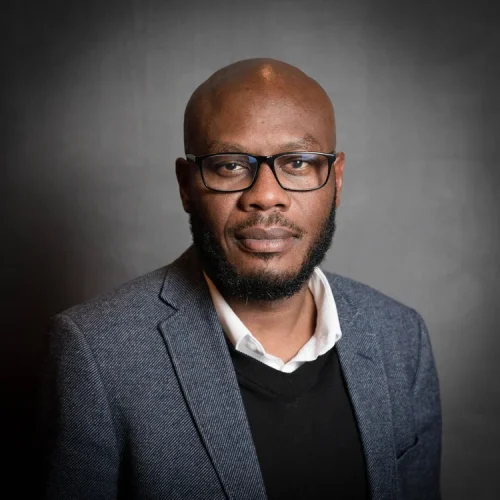
By Wale Osofisan, PhD
The first time I remember hearing about Botswana was when I was growing up in Nigeria in the 1980s. It was a long way from Nigeria and, at least in my young mind, it was not a country associated with investment, capital or business opportunity.
It is interesting how perceptions change. Today, Botswana is entering a very different conversation. It is still a country whose economy has been shaped significantly by diamonds, but increasingly the conversation is about what Botswana can do with the wealth those diamonds have generated and how it can prepare for an economy that will eventually have to depend on much more than diamonds. That is what caught my attention about the Diamonds for Development Fund.
The Fund is being established by De Beers in consultation with the Government of Botswana to support economic diversification. De Beers has committed an initial P1 billion, with the potential for its total contribution to reach P10 billion. The Fund is intended to support opportunities beyond the diamond value chain and help accelerate Botswana’s longer-term economic diversification.
It is also being led by someone whose own career has been closely associated with African development and investment. Dr. Akinwumi Adesina, former President of the African Development Bank, was appointed Chairperson of the Fund and formally assumed the role in June 2026. The Fund is being overseen by a Board of Directors, with an emphasis on independent governance.
There is nothing particularly revolutionary about setting up an investment fund. What is interesting is the intention behind this one. The idea is to use part of the wealth generated by diamonds to help build the wider economy. That immediately took me back to something I saw recently at the Global Africa Investment Summit (GAIS).
What struck me at GAIS was the effort to look at African assets through the eyes of investors. The discussion was not simply about the assets themselves. It was about what would be required to turn those assets into investable opportunities and connect them with the capital that could help develop them. This got me thinking about Africa in a slightly different way. We often talk about how little capital Africa has and how much more is needed to finance infrastructure, businesses, jobs and development.
But Africa also has enormous wealth. We have natural resources, public enterprises, infrastructure, land, pension savings, sovereign assets and successful private businesses. There is capital sitting in financial institutions across the continent, while African investors outside the continent also have money they could potentially deploy. The difficulty is getting all of this connected.
Could we develop more projects that are genuinely ready for investment? Can African pension funds and other institutional investors put more of their capital into productive assets at home? Would international investors come alongside African capital rather than being expected to finance everything? And how can the wealth generated by our existing assets help create the businesses and industries that will generate the next generation of wealth?
I do not see these as theoretical questions. I view them as practical ones. And Botswana is beginning to test one possible answer.
What happens after the diamonds?
Diamonds have been extraordinarily important to Botswana. They have generated revenue, supported public investment and played a major role in the country’s economic development. However, no country can assume that the conditions that created yesterday’s prosperity will remain unchanged forever.
The country’s development strategy has long pointed toward this need, and recent policy statements have emphasised expanding tourism, agriculture, manufacturing and financial services to build a more balanced and resilient economy.
The answer is not simply to extract more diamonds for as long as possible. It is to use the wealth created by diamonds to build other parts of the economy while there is still time and capital to do so. This is where the Fund’s approach becomes interesting. A business may have a strong idea and a viable market but still struggle to attract investment because it is too early or because the risks have not been properly understood.
READ ALSO:
- AFCON 2027Q: Super Eagles will not underrate Guinea-Bissau — Chelle
- MUSWEN Congratulates Yusuf Olaolu Ali, SAN, on Crescent University Honorary Doctorate
- 2027: Tompolo rallies Nasarawa for Tinubu, says reforms need consolidation
- ‘Post The Dead Body’ — Phyna Challenges Blessing CEO Over Son’s Reported Death
- AFCON 2027Q: How Simon inspired my goal against Madagascar — Usor
The same applies to infrastructure and other large projects. Sometimes what is missing is not the opportunity, but the preparation needed to make an investor comfortable putting money into it. That work is rarely glamorous. It involves developing projects, strengthening financial models, understanding risks, putting the right structures in place and bringing different parties around the table.
But it is often the difference between an opportunity remaining an idea and becoming something that can attract serious capital. The Fund’s emerging approach is to use catalytic capital to prepare high-potential projects, strengthen financial models, clarify risks and put credible structures in place. When that groundwork is done well, even a relatively small amount of early capital can unlock much larger pools of domestic, private, institutional and international investment.
Africa has more capital than we sometimes admit
This is where I think the Botswana story has wider relevance. Much of the development conversation concerning Africa has been framed around financing gaps. We calculate what is needed, identify what is missing and then look outside Africa for the money to fill the gap. There is a place for international capital. There always will be, but African economies also have growing pools of domestic capital.
Pension funds and insurance companies manage long-term savings, and Botswana’s own pension industry illustrates the scale of domestic capital. The Botswana Public Officers Pension Fund now manages P128.34 billion and is expected to reach P133 billion by 2027, underscoring how much long-term savings already exist within African economies. In Kenya, for example, the pension industry closed 2025 with assets under management of KSh 2.81 trillion, up 24.6% on the year.
The difficulty is not simply finding money. It is finding credible opportunities for that money to go into. An institutional investor cannot simply decide to put billions into a project because it is important to the government. The project has to make sense commercially. The risks need to be understood. The governance needs to be credible. There has to be a reasonable expectation of return.
This is why investment readiness matters. It is also why I think the work being attempted in Botswana is worth watching. If the Fund can help create a pipeline of credible businesses and projects, it could give domestic investors more opportunities to participate in Botswana’s economic growth. And over time, that could become more important than the Fund itself.
Now, imagine Botswana’s own long-term savings helping finance the country’s next generation of businesses and infrastructure. That is a very different relationship between national wealth and national development.
The test is what remains
There is one thing I would be particularly interested in watching. What remains when the catalytic capital has done its job? I ask this because of my own experience working in fragile and developing environments. I have seen programmes that delivered impressive results while the funding was available. The real difficulty often came later. Once the donor funding stopped, there was not always enough institutional capacity, domestic financing or local ownership to keep the gains going. Economic investment has a similar test because it is not enough to say that capital was deployed. We should ask what it built?
Did new businesses survive and grow? Did they create jobs? Did they generate exports? Did domestic investors come in? Did businesses become capable of attracting commercial capital without continued support? And, eventually, did the economy become more diversified?
Those are the things that will tell us whether Botswana’s experiment is working. The IMF has similarly noted that the Fund presents an opportunity to support Botswana’s long-term diversification, while stressing the importance of economic discipline, transparency and local job creation.
The governance of the Fund will matter enormously. So will the quality of the projects it supports, the discipline with which investments are made and the transparency with which results are measured.
There is a bigger African opportunity here
This is where the conversation needs to go across the continent. We have spent a lot of time asking how to attract foreign investment. We should continue doing that. Africa needs international capital and expertise. But we also need to look much more carefully at what we already own. A country can have a valuable port and still fail to create the investment structure needed to expand it. Ghana’s Port of Tema is a good example: the asset was always important, but serious investment only came once the project was properly structured and the risks were clearly allocated.
A country can also have a pension industry with billions under management while much of that money remains outside productive sectors. It may have enormous mineral wealth without developing the businesses, skills and industries that allow more value to remain in the country. It can have successful companies without creating the wider ecosystem that allows other businesses to emerge around them. These are not simply questions of money. I see them as questions of institutions, governance, project preparation, risk and the ability to connect capital with opportunity.
That is part of what I found interesting about GAIS. It is a noble attempt to look at African assets not simply as things we possess, but as assets that can be structured, developed and connected to capital.
I opened by recalling a Botswana that felt distant. Today, the country is shaping a very different conversation, one about how African countries can use their own wealth to build their own future.
If Botswana succeeds in turning catalytic capital into durable institutions, credible projects and genuine domestic investment, it will offer a lesson far larger than diamonds. It will show that the African development narrative is not only about what we lack, but about how we choose to deploy what we already have.
That is a long way from the Botswana I first heard about in the 1980s. It is also the direction Africa needs to move.
Dr. Wale Osofisan, PhD, is a seasoned governance strategist and policy analyst with over 24 years of experience advancing African-led, evidence-based solutions to political transitions, humanitarian crises and development challenges.
