

By Afolabi Olajuwon

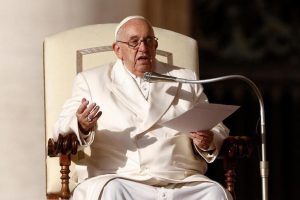
Pope Francis, since his election in 2013, has emerged as a global leader whose communication strategies transcend religious boundaries to address pressing global issues such as peace, social justice, and environmental sustainability.
I will be examining the unique communication strategies employed by Pope Francis, focusing on his use of inclusive language, digital platforms, and symbolic gestures to amplify his message of peace and solidarity.
Drawing on interdisciplinary perspectives from communication studies, theology, and political science, my research on Pope Francis’s approach offers a model for effective global leadership in an increasingly interconnected world. The analysis is supported by references to key speeches, encyclicals, and public engagements, as well as scholarly critiques of his communication style.
In an era marked by polarization, conflict, and environmental crises, Pope Francis has positioned himself as a global peacemaker, leveraging his unique role as the leader of the Catholic Church to advocate for unity and justice. His communication strategies have been instrumental in shaping his global impact, enabling him to reach diverse audiences across cultural, religious, and political divides. I am looking at the key elements of Pope Francis’s communication approach, emphasizing their relevance to contemporary global challenges.
Pope Francis’s messages are characterized by their inclusivity and focus on universal themes such as human dignity, compassion, and care for the planet. His encyclicals, Laudato Si’ (2015) and Fratelli Tutti (2020), exemplify this approach, addressing issues like climate change and fraternity in a way that echoes with both religious and secular audiences. By avoiding dogmatic language and emphasizing shared values, Pope Francis has been able to engage with a wide range of stakeholders, from world leaders to grassroots activists.
One of the hallmarks of Pope Francis’s communication style is his use of symbolic gestures to convey his message. His decision to wash the feet of prisoners, embrace refugees, and visit conflict zones has demonstrated his commitment to humility and solidarity. These actions, often amplified by media coverage, have reinforced his credibility as a leader who practices what he preaches. Scholars such as Massimo Faggioli (2017) have noted that these gestures align with his vision of a “Church that goes forth,” breaking down barriers and fostering dialogue.
Pope Francis has embraced digital communication as a tool for global outreach. His active presence on social media platforms like Twitter (@Pontifex) and Instagram has allowed him to connect with millions of followers worldwide. His tweets, often concise and impactful, address contemporary issues while offering spiritual encouragement. This digital strategy has enabled him to engage with younger audiences and adapt to the changing media landscape, as highlighted by studies on religious communication in the digital age (Campbell, 2020).
Pope Francis’s emphasis on dialogue as a path to peace has been a cornerstone of his global impact. His role in facilitating the Cuba-U.S. rapprochement in 2014 and his calls for interfaith cooperation underscore his commitment to diplomacy. By positioning himself as a mediator and bridge-builder, he has expanded the Vatican’s influence in global affairs. His speeches at international forums, such as the United Nations, have further cemented his reputation as a moral voice on the world stage.
Pope Francis’s communication strategies offer valuable insights for leaders seeking to address difficult global challenges. His ability to combine traditional forms of authority with innovative approaches has enabled him to navigate the tensions between continuity and change. While his methods have been praised for their effectiveness, they have also faced criticism, particularly from conservative factions within the Church. Nonetheless, his impact on global discourse remains undeniable.
In conclusion, Pope Francis’s communication strategies exemplify the power of inclusive, authentic, and adaptive leadership in a globalized world. By prioritizing universal themes, leveraging digital platforms, and engaging in symbolic diplomacy, he has amplified his message of peace and solidarity. As the world continues to grapple with pressing issues, his approach provides a compelling model for fostering dialogue and driving positive change.
*Dr. Olajuwon is Fellow, Nigerian Institute of Public Relations, Institute of Management Consultants, / Chronicle Business School, Abuja, Researcher and resource person at the International Institute of Journalism, Abuja.
READ ALSO:
- 2027: APC, Tinubu’s 30-Day Petrol Discount Is Tokenism, Deceit – NDC
- Amupitan to GOCOP: Winners of 2027 elections will be determined by voters
- Agbakoba at GOCOP conference, urges media to test right to announce election results
- Gift Monday joins Boston Legacy FC in $500,000 transfer
- Ohale completes move to Italian club Como
