

By Ebitan Egbuson

“Nigeria is facing two key gaps in agriculture today: an inability to meet domestic food requirements, and an inability to export at quality levels required for market success. The former problem is a productivity challenge driven by an input system and farming model that is largely inefficient.”
– Food Security Cluster of the World Food Programme.
In 2021, Indian farmers embarked on a campaign of mass action against agricultural reforms that introduced new sales, pricing, and storage rules that put small-scale farmers at the mercy of large agro-industrial firms. For a whole year, international news channels tracked the protest as they stormed the country’s capital, New Delhi in their millions. In the end, the farmers had their way as they forced the government to abandon the controversial aspects of the reforms.
A defining aspect of the protest, while it lasted, was the sight of tractors of different makes, shapes, and sizes with which the farmers blocked major roads. A news report described one of the protest events as a “tractor rally”. The sight would have been unusual in Nigeria. The vast majority of Nigerian farmers are more familiar with machetes and hoes and shovels than tractors. And that lack of familiarity with the key tools of modern agribusiness is a major reason why Nigerian agriculture is underperforming so badly.
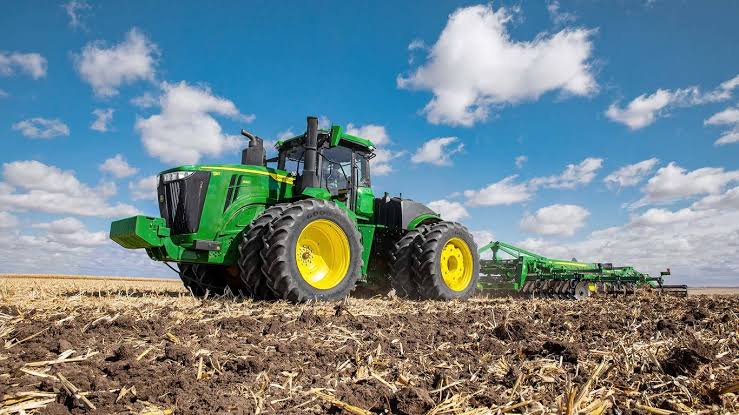
Tractors are a core component of agricultural mechanization and their large-scale absence in Nigerian agriculture is both a symptom and a cause of the failure of Nigerian agriculture to achieve the potentials that we talk about so much.
The statistics on Nigeria’s agricultural mechanization gap are depressing. Nigeria’s agricultural mechanization level is among the lowest in the world. According to the Federal Ministry of Agriculture and Rural Development, Nigeria’s mechanization status is at 0.027 hp/hectare, much lower than the Food and Agriculture (FAO) standard of 1.5 hp/hectare.
Admittedly, there have been some bright spots in Nigerian agriculture over the past decade. Innovative private sector players supported by a few progressive policies have produced decent results such as the Lake Rice collaboration between the Lagos and Kebbi governments and some partners. Enterprising Nigerian agripreneurs are making strides in exporting a growing list of agricultural commodities.
In 2022, according to data from the National Bureau of Statistics (NBS), the country generated N427.6 billion in revenues from exporting cocoa beans, sesame seeds, cashew, and other commodities. This represents a 14.9% increase, year-on-year compared to N372.2 billion in the same period the previous year.
Despite this progress, the big picture for Nigerian agriculture is still quite poor. The mass of about 38 million small-scale farmers in the country, about 20% of the population are still using barely improved primitive tools that their grandfathers used to eke out a precarious living from the soil. Productivity per hectare remains very low. Hunger and malnutrition rates are escalating as the recent figures by UNICEF show: one out of every three Nigerian households cannot afford a daily nutritious diet (estimated to cost N1687) daily. The capacity of Nigerians to feed themselves is getting worse and the exports are still a drop in the bucket compared to documented potential.
And that explains why mechanization must be central to any serious effort to improve this negative situation. Among other benefits, mechanization boosts productivity, saves time, promotes specialization, creates jobs, and reduces the physical and health hazards associated with subsistence farming. In other words, for the country to achieve the critical goals of higher productivity and large-scale farming, mechanization is indispensable. Without a significant improvement in mechanization, Nigerian agriculture will continue to be an endless tale of unfulfilled potential. There is an urgent need for the right policies that support the efforts of private sector organizations with solid track records working to bridge the mechanization gap in Nigeria.
In this respect, the consistent, rigorous, and impactful initiatives of organizations like Tata International Nigeria, the sole dealer in the iconic John Deere tractors and other agricultural equipment are significant. Tata/John Deere has been at the forefront of mechanization equipment provision in the country for the past ten years. With specialized solutions that take into account the specifics of clients’ operations, design, terrain, and funding, Tata’s operations are targeted at making a difference both on the field and in the bottom line of its expanding customer base.
The focus is on bespoke, custom-made solutions that work in the peculiar business environment of Nigeria through a proactive strategy. Among other John Deere brand solutions, Tata supplies Tillage (Plough, Harrow, Ridger, cultivators, rippers, rotavators, etc.), Crop care (Planters, Seeders, Sprayers, etc.), Harvesters, and Trailers. These solid solutions and products are backed by a trained team of technicians and spare parts warehouse across Nigeria.
The evidence of Tata’s impact can be seen in the positive results of the deployment of these John Deere products and solutions on the farms of its customers across the country – and by extension, on overall agricultural productivity in the country. The market response to its expertise and products has been robust over the past decade: John Deere is the most preferred mechanization brand in the country. Also, Tata/John Deere has supported agribusiness projects across the public and private sectors.
At the state level, it has supported agricultural schemes in Enugu, Ebonyi, Kebbi, Ondo, Cross River, Bayelsa, Akwa Ibom, Kano, etc. Some of the notable projects that have benefitted from Tata strategies and John Deere products include Dangote Rice & Sugar, Olam Rice, Flour Mills cereal and sugar project, BUA Sugar, Coscharis Rice, Panda Agric, Pally Agro. Tata/John Deere has also collaborated with some of the most reputable cooperative associations within and outside the agricultural sector. They include Tractor Owners & Operators Association of Nigeria (TOOAN), Tractor Owners and Hiring Facilities Association of Nigeria (TOHFAN), Traxi Continental Limited, Agropro Services, Kamtrac Nigeria, AMBEL Agricultural Engineering Services Ltd, etc.
It is also on record that Tata/John Deere was the first brand to support farmer groups with equipment under structured payment plans. Some of the beneficiary associations which benefitted and the units they acquired include RIFAN (100), NECAS (180), NACOTAN (93), and NWFMP (20).
Another milestone: Tata/John Deere pioneered a successful tractor rental business when it went into a successful partnership with Alliance for a Green Revolution in Africa (AGRA) to develop service providers in the country, birthing TATA’s asset rental business. This business model was tested in 2021 with 25 Tractors, and the success recorded provided the needed comfort to expand the pilot to 90 tractors in the second season (2022). The model has been developed to help the providers take ownership of the assets after successfully executing the rental program within the tenure agreed.
No doubt, Tata/John Deere – and the other players and partners in the agricultural space – have contributed to the reduction of the mechanization gap in Nigeria. Without their efforts, things would have been much worse. Their efforts are commendable because the Nigerian business environment is a challenging one. One key problem is the general lack of interest from commercial banks to finance mechanization equipment acquisition, principally because they lack a deep understanding of the agricultural value-chain business and are reluctant to venture into it on a long-term basis. There is an urgent need for the government and the organized private sector to put heads together on strategies and appropriate incentives to boost financial sector support for agricultural mechanization. Current policies on import tariffs which adversely affect the pace of adoption of mechanization have led to many vendors of equipment across the country reducing their operations.
Finally, the country requires a more robust mechanization framework to encourage the availability of finance to new service providers and facilitate the engagement of educated youths in agriculture as part of an overall strategy of taking Nigerian agriculture to the level that their tractor-riding counterparts in India and other developing countries are familiar with.
*Egbuson, a public affairs analyst, is based in Abuja.
