

By Tony Obiechina, Abuja

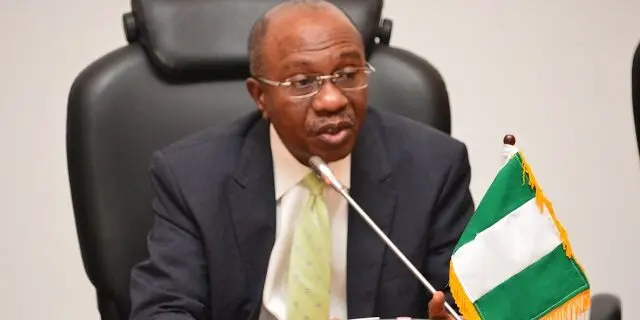
The Governor of the Central Bank of Nigeria (CBN), said on Tuesday that the apex bank embarked the Naira Redesign Policy to make the monetary policy decisions more efficacious as well as increase financial inclusion in the country.
According to him, the initiative is also aimed at supporting the efforts of the security agencies in combating banditry and ransome taking on the country.
Emefiele who disclosed this while briefing the Diplomatic and Consular Missions
at the Ministry of Foreign Affairs in Abuja, noted that “through this program and we can see that the Military are making good progress in this important task”.
The Governor stated that available data at the CBN showed that in 2015, currency in circulation was only N1.4trillion, adding that “as of October 2022, currency in circulation had risen to N3.23 trillion; out of which only N500 billion was within the Banking System and N2.7 trillion held in people’s homes”.
“These indicate that, so far, we have held excessive amounts of currencies in our hands rather than in banks or in cashless platforms. Ordinarily, when CBN releases currency into circulation, it is meant to be used and after effluxion of time, it returns to the CBN thereby keeping the volume of currency in circulation under the firm control of the CBN.
“It should also be noted that the Notes in private homes and outside the banking system are not available for economic activities and thus may affect the economy attaining its potential growth. Our in-house analysis of the pre-policy currency adequacy indicated not only that currency outside banks was excessive but also that quantum of currency in circulation was suboptimal.
“Exhaustive simulation and model-based analysis founded on the drive to achieve a 20% – 40% cashless economy indicate that the optimal value of currency in circulation for the Nigerian economy is only N700 billion. This is just a fraction of the hitherto currency supplied to the economy and could explain, in part, the excess demand we have witnessed in foreign exchange market and to some extent goods market”.
The Governor listed the expected Benefits of the policy include, to strengthen the performance of key macroeconomic parameters and equally combat social improprieties, and to reduce the amount of cash in underground or illicit economy, truncate the activities of racketeers, and obliterate rent-seeking businesses in the black market.
According to him, by reducing currency outside banks, it will shrink money stock and accordingly lower the long-run path of inflation, pointing out that “the ensuing deflationary pressure could elicit interest rate cuts that will in the short- to medium-term boost economic activities, spur aggregate demand, and enhance output growth”.
