

What Remains When Funding Ends?

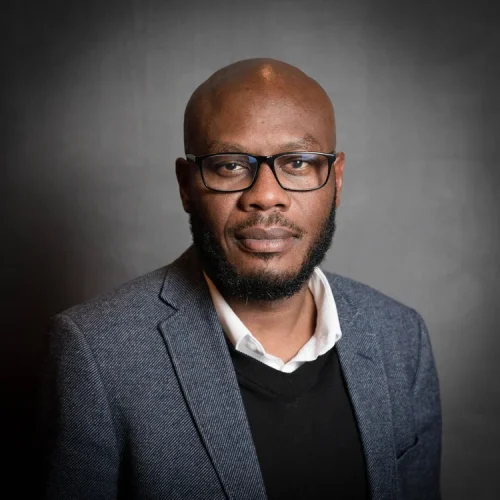
By Wale Osofisan PhD
I have spent much of my career working in places where the public systems we take for granted elsewhere are under enormous pressure.
That experience has convinced me of something that should be obvious but often gets lost in development financing: if we want development to last, we have to invest in the systems that sustain it.
This is particularly important for philanthropy.
Philanthropic capital can fund innovation, take risks and support things that governments may not yet have the resources or appetite to finance. But if that investment creates another programme that disappears when the funding ends, we should ask whether we have really invested in development or simply financed another intervention.
I saw the difference in Northeast Nigeria.
When my team at the International Rescue Committee helped co-design and implement the HeRoN health systems strengthening programme with partners, we were working in Borno, Yobe and Adamawa, states affected by years of conflict, displacement and institutional disruption.
The immediate needs were enormous. But the programme was intentionally designed around a different proposition: humanitarian action could save lives today while also helping strengthen the institutions that would have to provide services tomorrow.
HeRoN was initially funded by the UK’s Foreign, Commonwealth and Development Office and later by USAID, and was implemented in close partnership with the state Ministries of Health.
One result I remain particularly proud of was the integration of Community Health Influencers, Promoters and Services, or CHIPS, into the government system.
The significance was not simply that community health workers had been trained or supported. It was that the people doing this work were integrated into a system that could continue beyond the life of the project. That distinction matters enormously.
A donor can pay for a community health worker for 3 years. The more difficult question is what happens in year 4. Does the worker disappear when the project closes? Or has the investment helped create a public system in which the role, supervision, accountability and connection to primary healthcare can continue?
This is where I think we sometimes misunderstand the respective strengths of international organisations and governments even in fragile and conflict affected settings.
Think of it as a pipeline problem.
An INGO may arrive with one large, 20-inch pipeline. It has the people, systems, equipment and funding to push an intervention quickly and efficiently through that pipeline. It can often move faster than government because its systems have been designed specifically for the project and its funding is concentrated.
But that pipeline usually exists only for as long as the funding lasts.
Government, by contrast, may have hundreds of 2-inch pipelines reaching communities across the country. Many may be old, rusty, poorly maintained or partly blocked. They may be much less efficient than the INGO’s 20-inch pipeline.
The instinct is often to build another large pipeline because it is faster and produces visible results. But what if, instead, we invested in servicing and strengthening those hundreds of smaller pipelines?
We could clean them, repair them, improve the pressure, fix the connections and make sure someone is responsible for maintaining them. Individually, each pipeline may carry less. Collectively, however, they can reach far more people. And crucially, they remain in place after the external funding ends.
That, to me, is what systems strengthening should mean.
It is not about making government deliver exactly as an INGO does. It is about making the infrastructure government already has work better.
There are other examples of this across Africa.
Rwanda’s community health programme demonstrates what can happen when community-based health workers become part of the country’s wider public health architecture rather than remaining attached to individual projects. Ethiopia’s Health Extension Programme similarly built a national cadre of health workers connected to government health structures and primary healthcare.
These experiences are not perfect, and neither country has eliminated the challenges of financing, quality and accountability. But they demonstrate an important principle: external support can help build public capability rather than permanent external delivery capacity.
That principle matters even more in fragile and conflict-affected settings.
In such places, government systems may be weaker precisely when citizens need them most. Conflict can disrupt staffing, financing, infrastructure and public trust.
The answer cannot always be to build a parallel system because government is struggling. Sometimes that is necessary to save lives. Humanitarian assistance remains essential when people are facing immediate threats to their survival. But if the parallel system becomes the default model, we can unintentionally reinforce the weakness we are trying to overcome.
The harder task is to ask how external resources can help repair, strengthen and reconnect the public systems that citizens will ultimately depend on. That requires patience. Institutional capability is harder to fund than a project. It may mean strengthening procurement systems, improving government data, supporting local health and education authorities to plan and manage services, building public-sector leadership, improving financial management or strengthening accountability between service providers and service users.
None of these makes for quite as attractive a photograph or press statement. But they may determine whether progress survives or not.
There is also a deeper reason why these matters.
People affected by crisis should not have to depend indefinitely on external organisations for basic public services.
A child in Borno should be able to access healthcare because there is a functioning health system, not because an international organisation happens to have a grant this year.
A mother in a rural community should not have to know which donor-funded project is operating in her area to understand where she can get care.
And a government should not have to wait for the next funding cycle before it can continue a service that has already proven its value.
This is not an argument for simply transferring money to governments. Public institutions need scrutiny. They need accountability. They need better management. They need citizens who can demand results.
That is precisely why systems matter. A functioning public system creates something that an externally delivered project cannot easily create: a relationship of accountability between citizens and the institutions responsible for serving them.
It also creates the possibility of scale. One organisation can run an excellent programme in 50 communities. A government system, when it works, can take a good idea to thousands of communities.
The question is how we get those hundreds of smaller pipelines working well enough to carry the water.
This is where philanthropy has a unique opportunity. Philanthropy does not have to replace government. It can help government become better at doing what only government can do at scale.
It can finance experimentation that governments cannot afford to get wrong. It can bring technical expertise. It can support reforms that take years to mature. It can help build systems before commercial capital is ready to enter. But philanthropy should be judged not only by what its money delivers while the grant is active. We should also ask what remains when the grant ends.
Did the country gain an institution?
Did government gain capability?
Did citizens gain a more reliable service?
Did local actors gain the ability to solve problems themselves?
Did the investment make the next dollar of public or private capital more productive?
These are harder and I would argue, more relevant questions than counting beneficiaries. They are also much closer to what sustainability actually means.
READ ALSO:
- 2027 AFCON Qualifiers: Nigeria Struggles As Guinea-Bissau, Morocco, Rwanda lead Groups
- Cyber-Fraud: EFCC Secures Final Forfeiture of 431 Phones from Chinese Convicts
- Beach Soccer AFCONQ: Sand Eagles prepare for Ghana clash with Senegal friendlies
- Indian hospital features Ex-Head of State Abdulsalami in knee surgery advert
- BREAKING: Tinubu to address Nigerians at 66th Independence anniversary
Africa does not need development finance that simply gets better at delivering projects and counting beneficiaries. It needs capital that helps build the systems, institutions, markets and capabilities that allow Africans to solve more of their own problems.
Sometimes the most valuable thing philanthropy can fund is therefore not the service itself. It is the system that makes the service sustainable.
I saw a version of that in Northeast Nigeria. In a fragile and conflict-affected environment, we were able to take something that began with external funding and work towards embedding it within the public health system.
That is the kind of transition we should be designing for from the beginning. Because the real test of donor funding is not what happens while we are there. It is what is still working after we leave.
