• Home
  • Top Stories
  • News
    • Photo News
  • Politics
  • Business
  • Crime & Security
  • Sports
  • Intimacy
  • About Us
    • Contact Us
    • Privacy Policy
    • Advert Rate
  • More
    • Opinion
    • Lifestyle & Entertainment
    • Foreign News
    • Health
Facebook Twitter Instagram
Friday, October 9
Facebook Twitter Instagram
Prompt News
  • Home
  • Top Stories
      Featured

      US jails Nigerian businessman 30 months for laundering $359,000

      Foreign News October 8, 2026
      Recent

      US jails Nigerian businessman 30 months for laundering $359,000

      October 8, 2026

      Alli condemns attacks on Oyo APC candidates, warns Makinde, Adekanmbi

      October 8, 2026

      Ashibogwu Tutors Online Publishers On Monetising Digital Media

      October 7, 2026
    1. News
      1. Photo News
      Featured

      2027: Ayandele slams Makinde’s Commissioner, says Ibarapa will deliver massive votes for APC

      News October 9, 2026
      Recent

      2027: Ayandele slams Makinde’s Commissioner, says Ibarapa will deliver massive votes for APC

      October 9, 2026

      Two-Term Oyo Assembly Member Dumps Makinde’s APM

      October 9, 2026

      FG’s Digital Project to Deliver 90,000 Kilometres of Fibre Across 36 States by 2028 – Yilwatda

      October 9, 2026
    2. Politics
        Featured

        2027: APC, Tinubu’s 30-Day Petrol Discount Is Tokenism, Deceit – NDC

        Politics October 9, 2026
        Recent

        2027: APC, Tinubu’s 30-Day Petrol Discount Is Tokenism, Deceit – NDC

        October 9, 2026

        Oyo APC candidate alleges attacks on wife, two aspirants

        October 9, 2026

        Presidency, APC blast Amaechi over Tinubu voting remark

        October 9, 2026
      1. Business
          Featured

          World Bank Urges States to Prioritise Better Jobs, Human Capital, Services Amid 93% Revenue Rise

          Business October 9, 2026
          Recent

          World Bank Urges States to Prioritise Better Jobs, Human Capital, Services Amid 93% Revenue Rise

          October 9, 2026

          EHA Impact Ventures Helps Moppet Foods Launch Operational Biodigester, Cutting Emissions Across Its Lagos Factory

          October 7, 2026

          NNPCL 2025 AFS: The Numbers Tell a Story of Transformation

          October 7, 2026
        1. Crime & Security
            Featured

            NAF searches for black boxes five days after fatal Ondo crash

            Crime & Security October 9, 2026
            Recent

            NAF searches for black boxes five days after fatal Ondo crash

            October 9, 2026

            Police arrest ex-convict over POS operators’ robbery

            October 9, 2026

            Ondo driver arrested after VIO officer dies during vehicle check

            October 9, 2026
          1. Sports
              Featured

              LA 2028 Qualifiers: Kenya Spell Seychelles As Zambia bite dust

              Sports October 9, 2026
              Recent

              LA 2028 Qualifiers: Kenya Spell Seychelles As Zambia bite dust

              October 9, 2026

              2028 Olympics Qualifiers: Super Falcons secure 2-0 win over Comoros

              October 9, 2026

              2028 Olympics Qualifier: Super Falcons must not underestimate Comoros– Eguavoen 

              October 9, 2026
            1. Intimacy
            2. About Us
              • Contact Us
              • Privacy Policy
              • Advert Rate
            3. More
              • Opinion
              • Lifestyle & Entertainment
              • Foreign News
              • Health
            Prompt News
            Home » Sustaining EFCC and ICPC rebound: A critical analysis
            Opinion

            Sustaining EFCC and ICPC rebound: A critical analysis

            Prompt NewsBy Prompt NewsJanuary 5, 2025Updated:January 5, 2025No Comments5 Mins Read
            Facebook Twitter LinkedIn Telegram Pinterest Tumblr Reddit WhatsApp Email
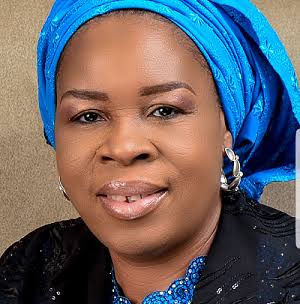
            Zainab-Suleiman-Okino
            Hajiya Zainab Suleiman Okino
            Share
            Facebook Twitter LinkedIn Pinterest Email

            By Zainab Suleiman Okino

            The Economic and Financial Crimes Commission (EFCC) has persistently drawn sharp criticism for its glaring lack of proactivity, blatant politicization of investigations, and troubling predilection for media trials of alleged offenders. This unfavourable perception isn’t merely speculative—it has been repeatedly validated by the commission’s embarrassingly faulty prosecution strategies, resulting in the collapse of seemingly watertight cases, particularly those involving high-profile politicians. While the recent mass arrest of 792 cybercrime suspects might suggest a departure from the organisation’s historically politicized operations, we must approach this development with measured scepticism.

            The commission’s trajectory since its establishment in 2003 reads like a cautionary tale of institutional manipulation. It has consistently served as a political weapon, wielded with precision by successive presidents against their opponents while conveniently shielding their allies from scrutiny. My personal encounters with the commission—first as a witness and later as an accused—provide firsthand insight into their selective prosecution patterns. Though I emerged unscathed after brief interrogations and perfunctory statement-writing, these experiences illuminated the deeply entrenched bias within the anti-corruption agency. Yet, despite its profound flaws, we must acknowledge an uncomfortable truth: without the EFCC and its sister agency, the Independent Corrupt Practices and Other Related Offences Commission (ICPC), Nigeria’s corruption landscape might be significantly more devastating.

            The EFCC’s history of partisan enforcement reached notorious heights during President Obasanjo’s administration. Under Nuhu Ribadu’s leadership, the commission earned a reputation for aggressively targeting political opponents while turning a blind eye to flagrant corruption within the ruling party. This disturbing pattern didn’t merely persist—it became increasingly sophisticated through subsequent administrations, with each new government refining the art of weaponizing the EFCC for political vendettas. The Buhari administration particularly exemplified this trend, as anti-corruption efforts morphed into a thinly veiled mechanism for opposition harassment while government allies enjoyed virtual immunity. The arrest of former acting chairman Ibrahim Magu on corruption charges in 2020 wasn’t merely a scandal—it was a damning indictment of the institution’s susceptibility to the very corruption it purported to fight.

            The recent cybercrime crackdown, while impressive in scale, demands rigorous scrutiny. Yes, the operation targeted actual criminal activities rather than political opponents, and the arrest of foreign nationals suggests improved international cooperation. The raid on Victoria Island’s “hustle kingdom,” yielding 792 suspects including 193 foreigners, has generated patriotic fervour in us understandably. However, we must question whether this operation represents genuine institutional reform or merely a strategic shift in targets.

            The pervasive culture of cybercrime in Nigeria, manifested through various “yahoo” schemes, reveals a profound moral crisis in our society. The phenomenon of overnight millionaires through cybercrime isn’t merely a law enforcement challenge—it’s a damning indictment of our collective values. Perhaps most disturbing is the complicity of parents who maintain willful ignorance about their children’s suspicious wealth, highlighting a broader societal decay that transcends individual criminal acts.

            The EFCC’s premature announcement of the Victoria Island operation, before completing thorough investigations, exemplifies the commission’s persistent addiction to publicity over procedure. While this raid may temporarily boost the agency’s image, particularly following its controversial handling of former Kogi state governor Alhaji Yahaya Bello’s case, it raises serious questions about investigative integrity and due process.

            Critical inquiries remain insufficiently addressed: What systematic approach exists for investigating established cybercriminal networks within our communities? Why did the Victoria Island operation require such prolonged surveillance, and what triggered the eventual raid? The involvement of foreign nationals in these criminal enterprises raises alarming questions about our national security infrastructure. How have foreigners managed to so easily penetrate our systems, recruit local talent, and establish sophisticated criminal operations on Nigerian soil? The identity and influence of local facilitators demand thorough investigation.

            The international dimensions of this case present both opportunities and challenges. Nations with stringent cybercrime laws will scrutinise the EFCC’s handling of foreign suspects, potentially affecting diplomatic relations and cross-border law enforcement cooperation. The question of extradition looms large, testing Nigeria’s commitment to international justice protocols.

            Meanwhile, the ICPC’s recent performance statistics, while superficially impressive, warrant deeper analysis. Chairman Musa Adamu Aliyu’s report of processing 1,187 petitions and securing 18 convictions in 2023, followed by 851 petitions and 13 convictions in 2024, reveals a concerning conviction rate. The recovery of 13 billion naira within 24 hours in September 2024, while noteworthy, raises questions about the sustainability of such operations and the fate of recovered funds.

            The fundamental challenges confronting both the EFCC and ICPC extend beyond operational inefficiencies to the very fabric of Nigerian society. Corruption has become so deeply embedded in our national psyche that fighting it requires more than institutional reform—it demands a complete reconstruction of our social values. The agencies’ struggle against corruption resembles an attempt to drain an ocean with a bucket, given the systemic nature of the problem.

            The path forward demands not just sustained commitment but a radical reimagining of anti-corruption efforts. Recent successes, while encouraging, must not blind us to the need for fundamental institutional reform. The true test lies not in high-profile raids or impressive statistics but in the consistent, impartial application of justice across all strata of society. Only when the EFCC and ICPC demonstrate unwavering commitment to prosecuting corruption regardless of political affiliations or social status can we begin to envision the Nigeria of our aspirations—a nation where integrity triumphs over impunity, and justice operates without fear or favour.

            Zainab Suleiman Okino chairs Blueprint Editorial Board. She is a syndicated columnist and can be reached via: zainabokino@gmail.com

            corruption EFCC Hajiya Zainab Saleh ICPC
            Share. Facebook Twitter Pinterest LinkedIn Tumblr Telegram Email
            Previous ArticlePremier League: Manchester United Fight Back To Earn Draw Against Liverpool 
            Next Article Lagos: The City of Aquatic Splendour! By Rashidat Yusuf
            Prompt News

              Related Posts

              The Architecture of Progress: A Scientific Framework for Developmental Systems

              October 9, 2026

              The Anatomy of Systemic Orchestration: A Foundations-to-Applications Manifesto for Development Science

              October 9, 2026

              Asari Dokubo and the Dangerous Politics of Entitlement, by Sufuyan Ojeifo

              October 8, 2026
              Add A Comment

              Comments are closed.

              Recent Posts
              • 2027: Ayandele slams Makinde’s Commissioner, says Ibarapa will deliver massive votes for APC
              • Two-Term Oyo Assembly Member Dumps Makinde’s APM
              • FG’s Digital Project to Deliver 90,000 Kilometres of Fibre Across 36 States by 2028 – Yilwatda
              • LA 2028 Qualifiers: Kenya Spell Seychelles As Zambia bite dust
              • NAF searches for black boxes five days after fatal Ondo crash

              CONTACT INFORMATION

              Prompt News Online is published by PNO Dynamic Media Limited.

              Address: Suite 24, Abebi Plaza, Oluseyi, Sango – Eleyele Road, Ibadan, Oyo State, Nigeria.

              Managing Editor/CEO: Akeem Oyetunji

              Email: promptnewsonline@gmail.com or editor@promptnewsonline.com

              Phone/WhatsApp: +234806 286 2057
              Or 0805 386 6284

              ABUJA OFFICE: 
              Address: Suite D76, EFAB Mall
              Off Gimbya Street, Area 11, Garki, Abuja
              ABUJA BUREAU EDITOR: Harry Awurumibe
              Phone: 0803 302 4300
              Email: harryawurumibe360@gmail.com
              UK OFFICE:
              Address: 34 Skipper Court,
              Abbey Road, IG 11 7GW.
              Barking, London, UK.
              EDITOR EUROPE: Bolaji Oyegunle
              Phone +447878196776
              Email: gb10oyegunle@gmail.com
              © 2026 Prompt News Online. Designed by DeedsTech.
              • About Us
              • Contact Us
              • Advert Rate
              • Privacy Policy

              Type above and press Enter to search. Press Esc to cancel.