

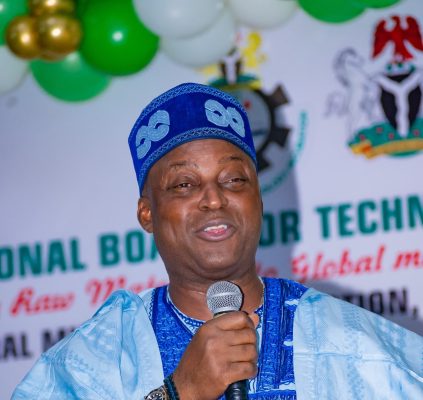
By Otunba Wole Badmus

Genocide, in its true sense, refers to the deliberate and systematic extermination of a national, ethnic, racial, or religious group. Such actions are often state-backed or executed with official complicity. It is classified as an international crime under the Convention on the Prevention and Punishment of the Crime of Genocide, encompassing acts carried out with intent to destroy, wholly or partly, a protected group including mass killings, infliction of grievous bodily or mental harm, or the imposition of conditions designed to bring about the group’s destruction.
When examined within this context, the situation in Nigeria — as interpreted by U.S. President Donald Trump, who described it as a Christian genocide clearly does not fit that definition.
Like every diverse nation, Nigeria faces its share of internal challenges, with insecurity being one of the most persistent in recent years. However, the victims of these violent occurrences cannot be categorized by tribe or religion. The tragedy of insecurity has affected all groups equally, Muslims and Christians, northerners and southerners alike.
While Nigeria continues to grapple with the menace of banditry, kidnapping, and insurgency, it is important to note that no nation is entirely free of internal turmoil. Even advanced societies contend with rising threats born of human and environmental factors.
For instance, data from the Office for National Statistics (ONS) in England and Wales show that knife-related offences dropped from 52,000 in 2019/20 to 41,700 in 2020/21, largely due to COVID-19 restrictions but rose again to 50,400 in 2023/24. By March 2025, the number stood at 49,600, excluding figures from Greater Manchester. Similarly, in the United States, gun violence claims an average of 45,738 lives annually, with more than half of these fatalities categorized as homicides.
It was, therefore, both surprising and unsettling to hear the statement credited to the U.S. President regarding an intended military intervention in Nigeria particularly at a time when his own country faces severe internal challenges, including a government shutdown.
Many observers believe that such a statement was neither altruistic nor diplomatic, but rather politically and economically motivated. Whatever the case, the utterance was ill-timed, provocative, and capable of destabilizing Africa’s most populous nation. The scars of the Arab Spring remain visible across the Sahel, a region that continues to serve as a corridor for illicit arms and fighters contributing to insecurity within Nigeria.
Against this backdrop, President Bola Ahmed Tinubu’s calm and diplomatic response deserves commendation. His measured approach not only helped defuse the tension that followed the remarks but also strengthened the foundation for renewed trust and cooperation between Nigeria and the United States.
READ ALSO:
- 2026 U-17 WWC: Adegbuyi vows more goals for Flamingos
- Woman seeks divorce as husband allegedly defecates, urinates on himself when drunk
- Man catches wife living with best friend, seeks compensation
- Woman wins divorce after husband sells family home, ignores her for seven years
- Man arrested over alleged killing of ex-girlfriend after breakup
Yet, beyond diplomacy lies the real solution to insecurity — addressing its root causes. At the heart of Nigeria’s instability is a restless youth population that remains underutilized and underemployed. For decades, the country relied heavily on crude oil, neglecting the transformative potential of technology and innovation in a rapidly evolving world.
Thankfully, under President Tinubu’s Renewed Hope Agenda, deliberate efforts are being made to reposition technology as a driver of national development.
A major step in this direction was the appointment of Dr. Kazeem Kolawole Raji as the Director-General of the National Board for Technology Incubation (NBTI) on January 20, 2025. His mandate: to revitalize the nation’s Technology Incubation Program and link innovation, entrepreneurship, and industrial growth.
The Technology Incubation Program is a globally recognized model for stimulating local and regional economic development by connecting research, ideas, and enterprise.
Since assuming office, Dr. Raji has reinvigorated the agency, focusing on its core objectives of bridging technology with talent, capital, and industry expertise to drive entrepreneurship, accelerate commercialization of research outputs, and transform innovative ideas into viable market solutions.
Under his visionary leadership, NBTI has forged strategic alliances with key institutions, both domestic and international, to expand innovation capacity, empower entrepreneurs, and unlock new opportunities for economic advancement.
Among the Board’s prominent partners are:
UKALD (United Kingdom): Strategic collaborator for the 1st Nigeria Technology Innovation Challenge — NextGen Innovation Challenge 2025.
TECHHOOD: Providing expertise in strategic planning, stakeholder engagement, and mobilization of grants.
ENVISION MANAGEMENT SOLUTIONS: Broadening global exposure for Nigerian innovators.
FEDERAL POLYTECHNIC, OFFA: Fostering indigenous creativity and preparing youth for the digital future.
AEROSKY TECHNOLOGIES LIMITED: Driving Nigeria’s drone technology revolution.
NAVIGATION 360 FOUNDATION: Expanding grassroots participation in innovation programs.
NATIONAL DIRECTORATE OF EMPLOYMENT (NDE): Combating joblessness and promoting inclusive economic growth.
CONSTITUENTS FOR DEVELOPMENT INITIATIVES (CDI): Advancing indigenous technology and commercialization.
WORLD INTELLECTUAL PROPERTY ORGANIZATION (WIPO): Strengthening IP protection for inventors.
ECOFLUX NIGERIA LTD: Supporting tech entrepreneurship through national hackathons.
SEYI TINUBU’S CAMPUS TECHNOVATION: Empowering students to become leaders in technology and innovation.
These collaborations mark a turning point in Nigeria’s innovation journey, laying the groundwork for sustainable industrial growth and technological independence.
At the heart of Dr. Raji’s initiatives is the NextGen Innovation Challenge, a visionary National Movement designed to discover and elevate young inventors, scientists, and entrepreneurs across the country. It stands as the first of its kind in Africa. It is a legacy project of the Raji-led NBTI administration.
The Challenge seeks to:
Empower: Provide mentorship, resources, and exposure to transform ideas into viable enterprises.
Innovate: Encourage solutions to pressing local and global problems.
Collaborate: Foster synergy among academia, investors, and government institutions.
Compete Globally: Position Nigeria as an emerging hub for innovation and technology.
The Challenge covers vital sectors such as agriculture, renewable energy, health tech, education technology, biotechnology, fintech, artificial intelligence, robotics, 3D printing, ICT infrastructure, clean energy, mining, cybersecurity and more.
During the unveiling of the Challenge Portal on May 28, 2025, at the Raw Materials Research and Development Council Auditorium in Abuja, Dr. Raji highlighted that the initiative was inspired by President Tinubu’s bold vision to place innovation at the heart of national transformation.
“This program embodies a renewed vision that aligns perfectly with the Renewed Hope Agenda of President Bola Ahmed Tinubu, GCFR, whose leadership and Nigeria-First policy have made innovation, technology, and industrial growth central to our nation’s development,” Dr. Raji noted.
He further emphasized that the Challenge represents more than a competition — it marks the dawn of a new era, one powered by the creativity and resilience of Nigeria’s youth in every community and region.
The Grand Finale of the Challenge took place on October 9, 2025, at the Hilton London Paddington Hotel, where Nigerian ingenuity took global center stage. Declaring the event open, Dr. Raji remarked that:
“For decades, Nigeria was defined by crude oil. But today, innovation is the new oil, technology is the new frontier, and entrepreneurship is the new engine of national growth.”
The London Showcase attracted an impressive audience of global dignitaries, including:
Ambassador Eche Abu-Obe, Nigeria’s Acting High Commissioner to the UK;
Representatives of the Governors of Kaduna, Jigawa, Rivers, and Kogi States;
Dr. Shambhu Pokharel, CEO, Tesla Group Europe;
Representatives of the UK Department for Business and Trade;
Princess Opeyemi Bright, Mayor of Barking;
Victor Kitange, Economic Adviser, Commonwealth Group;
Diplomats, investors, and corporate leaders from the UK, Singapore, Qatar, Germany, Canada, Israel, and the Commonwealth;
Members of the Nigerian Diaspora across Europe and others.
The fallouts from the NextGen innovation challenge 2025 are the required solutions to the menace of insecurity in the land. Many hitherto unknown innovators were unleashed into the world stage thereby giving them the required visibility and patronage.
The story of Al’amin Mohammed Idris, CEO of Interface Africa (Kaduna State) is most inspiring. He emerged the overall winner of the NextGen Innovation Challenge 2025. He received a £1.5 million (a whooping over ₦3 billion) cash award for his innovative solar-financing model for small businesses across Africa — a project that demonstrated both social impact and global competitiveness.
The Grand finale featured innovation pitches from 105 Nigerian innovators with scalable, investable solutions. Standout presentations included:
Bra-X: A smart wearable bra for early breast cancer detection by Joseph Ikechukwu Osuagwu (Imo State)
Multi-Patient Ventilator: Designed by Babson Ajibade (Osun State), capable of supporting six patients simultaneously
SmartAgri Drones: AI-powered drones for precision farming and pest control by Shamsudeen Jibril (Kaduna State) and Abdullah Ammani Fagge
DEDOC: An AI-based multilingual healthcare assistant by Eze Joel Chukwudi (Enugu State).
WASTELOGIC: a digital waste management platform that connects households, offices, and estates to verified waste collectors via a mobile app by Farida Suleiman Unique (Kogi State).
To Dr Raji, in today’s global village, the frontier-knowledge elites, the elites of the technological and the digital revolutions are the undisputable custodians of strategic and economic power for now and in the future.
‘Today, our post-colonial national revenue generation model of an oil-export-only economy has been clearly shown to be unsustainable in the 21st Century. The obvious solution, as experts have pointed out is to diversify the productive base of our national economy and urgently train and re-train our youths and national workforce technologically and digitally. This solution is, as can be easily seen, an undeniable integral programme of the ‘RENEWED HOPE AGENDA’ of the incumbent administration of President Bola Ahmed Tinubu, GCFR’.
The NextGen Innovation Challenge 2025 is Dr Raji’s strategic response, his pathway and model to ensuring that the indigenous local ingenuity is scaled into global enterprise.
The NextGen Innovation Challenge 2025 is a National Technology Movement for the Bold and the Brilliant minds and it is not a mere competition; it is a clarion call to the youths to rise and lead. It is a platform designed to identify, nurture, and amplify the talents that often lie hidden in underserved communities—from the markets of Kano to the creeks of the Niger Delta, from rural farms to urban hubs. No idea is too small.
Otunba Wole Badmus is the Special Adviser on Media and Publicity to Dr. Kaseem Kolawole Raji, DG, NBTI.
