

ABUJA – The current economic reforms in Nigeria are where the fortunes of the Africa’s largest economy will be unlocked, a Think Tank group, the Independent Media and Policy Initiative (IMPI), concludes after analysing the rudiments of the policies.

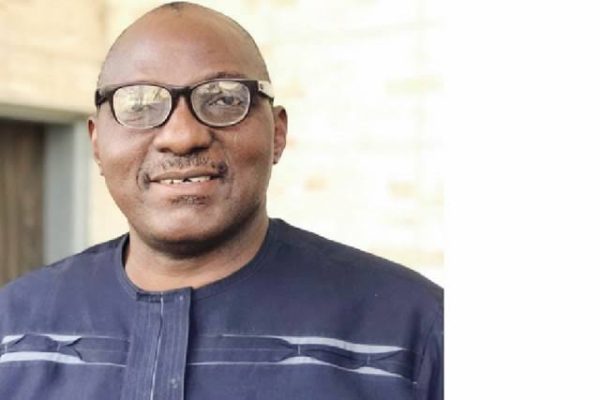
A policy analysis released on Tuesday in Abuja by the Chairman of IMPI, Mr Niyi Akinsiju, said it was crucial to keep eyes on the bright “spots in Nigeria’s economy’’ even as the reforms bite harder for now.
As one of the nation’s global economic entrepreneurs puts it, IMPI reports that
“while pessimism abounds, it is crucial to keep our eyes on the bright spots in Nigeria’s economy. We write off and ignore the country at our own peril; it could very well become a 22nd century superpower’’.
Akinsiju said it was to this end that we are unpretentious about the support and advocacy for the policies being advanced by President Bola Tinubu’s administration targeted at enabling a market-driven economy.
“This should be the big picture for every forward looking Nigerian. Our fate should not be about existing from one day to the other; it should be about accepting the generational responsibility of standing in the gap for future generations.
“To sacrifice our today to change the economic trend of our country where rather than have millions numbered in poverty, we will have millions counted in wealth,’’ Akinsiju said.
The Think Tank peeped into the history of the nation’s current economic milieu and the series of policies on foreign exchange market as well as the controversial subsidy in petrol and concluded that a free economy of the current administration was most ideal.
“We have to go back to June 15, 2016. Nigeria’s central bank announced it would abandon its currency’s dollar peg in preference for a free float of the Naira in an effort to alleviate the chronic foreign currency shortages choking growth in Africa’s biggest economy.
“Under one week after the announcement, the Naira slumped from the pegged rate of N197/$ to N287/$. Three months down the road, in August 2016, the rate had fallen by an aggregate 61 percent to the dollar.
“Expectedly, there was bedlam in the economic space with the din of the attendant noise becoming aggravated when Nestle Nigeria Plc, a multinational company renowned for its consistent profit outturn published its year end result with a depressing 94 percent drop in profits, a phenomenon blamed on the currency depreciation.
The depreciation also led to Nigeria losing its title as Africa’s largest economy — a symbolic downgrade that succinctly summarized the many challenges facing the country at that time.
For many followers of the national economy in that year and beyond, current happenings in the Nigerian economy are akin to walking through the same historical corridors.
Indeed, Nigerians had walked this path before and had experienced the same seeming awry economic assaults on their very existence as a people. The immediate reflex associated with such scenario was to capitulate. And capitulate, the country did.
Less than six months after the CBN’s free float policy adoption, inflation rates were skyrocketing in reflection of the vastly depreciated Naira. The CBN could not take the heat any longer. It dramatically announced a reversal to a currency pegged regime and a managed float of the Naira at the same time.
The country went back to its tradition of multi-tiers foreign exchange market. By May 2017, the country had five different forex rates. The interbank rate closed at N305.72/$ in second quarter 2017, the rate for government official transactions was N306/$, at the Investors and Exporters window, it was N360/$, and N366/$ at the parallel market.
This reversal to multiple exchange rate regime was accompanied with a capital control policy, the CBN restricted 43 items from accessing the official foreign exchange market.
In truth, the Nigerian economy had been buffeted from different sides by many domestic and global assailing factors between 2016 and 2020 which may provide an understanding of the Federal Government and CBN’s
insistence on state controlled and managed economy for the benefits of the poor and vulnerable. Yet, after many years of the control and managed options, we are left with an economy in stagnation; one that depends on the periodic boom in the oil and gas sector to deliver momentary economic prosperity.
He explained that by 2023, an economic template change had become inevitable.
“In our consideration, we believe that the Tinubu administration read the situation well by making overtures to the CBN to revert to the free float exchange policy.
Of course, the economy, like in 2016 has since responded to the policy with a volatility that is not only immediate but intense with macroeconomic rates flaring up disconcertingly. This had led to high cost of living uproar across different segments of the nation.
But rather than beat a retreat and embrace the populist option, the President has determinedly decided to walk the hard, lonely route of application of unpopular yet result oriented policy, by insisting on sustaining and driving the national economy on the wings of the already introduced policies, chief of which are the fuel subsidy removal and unification of Forex rates.
President Tinubu reinforced his commitment to going the whole hog with the implementation of these policies when he publicly declared during his visit to Qatar that: “This economy, we will grow it, and we will feed ourselves out of penury…if it’s corruption, we must exterminate it no matter how hard it is fighting back.”
We find this declaration instructive. It affirms the President’s unwavering commitment to seeing through the reforms he has undertaken to implement.
We also agree with the President’s call on Nigerians to persevere at this time because, according to him, nation-building requires perseverance and patriotism to succeed. It is to these two value orientations that we call the attention of Nigerians.
This country, by all possible evaluation metrics, is an economic giant waiting to take its position in the sun but it has remained stunted over the years because of policy misapplications, especially of such that emphasise today’s existence in opposition to creating wealth premised on delayed gratification.
We also agree with the President’s call on Nigerians to persevere at this time because, according to him, nation-building requires perseverance and patriotism to succeed.
It is to these two value orientations that we call the attention of Nigerians.
This country, by all possible evaluation metrics, is an economic giant waiting to take its position in the sun but it has remained stunted over the years because of policy misapplications, especially of such that emphasise today’s existence in opposition to creating wealth premised on delayed gratification.
With removal of subsidy in petrol, the daily consumption dropped by at almost 50 percent, a leakage that almost crippled Nigeria.
We also agree with the President’s call on Nigerians to persevere at this time because, according to him, nation-building requires perseverance and patriotism to succeed. It is to these two value orientations that we call the attention of Nigerians.
And also as we reference the robust optimism expressed by South African billionaire and Chairman of South Africa global grocer brand, Shoprite, Christo Wiese, who recently said that Nigeria’s large and growing population is impossible for businesses to ignore and that the recent exodus of companies from the country won’t last.
It is exhilarating to note that this sanguine description of the Nigerian economic state is coming from a foreigner who sat over a huge business concern that operates out of states across Nigeria. He definitely speaks from the point of knowledge and experience.
For him, Nigeria with over 200 million people, is the economic giant of Africa. This sizable consumer base presents an attractive investment hub for businesses and investors seeking opportunities in the region.
While no rational investor can ignore Nigeria, yet, economic makeovers such as the removal of fuel subsidy and floating of the naira aimed at revitalizing the economy, have yet to yield positive results.
Nonetheless, we have observed the peculiar Nigerian spirit of adaptation in the face of challenges and vicissitudes at work as exchange rates become prohibitive and inflation rates continue to increase. Nigerian startups, for example, are beginning to explore local options for some of the foreign-denominated services their operations require. READ ALSO:
- GOCOP Trains Members On Deployment Of AI Tools to Boost Efficiency, Profitability
- Ashibogwu Tutors Online Publishers On Monetising Digital Media
- Newsroom must create strategic knowledge to survive the new era – Max Amuchie
- EHA Impact Ventures Helps Moppet Foods Launch Operational Biodigester, Cutting Emissions Across Its Lagos Factory
- Woman kills newborn son with razor blade days after delivery
FULL STATEMENT BY IMPI
Policy Statement 08 Issued By Independent Media and Policy Initiative
Tinubu’s Reforms: We Admonish No Retreat, No Surrender
To understand the nation’s current economic milieu, we have to go back to June 15, 2016. Nigeria’s central bank, on that day, announced it would abandon its currency’s dollar peg in preference for a free float of the Naira in an effort to alleviate the chronic foreign currency shortages choking growth in Africa’s biggest economy.
Under one week after the announcement, the Naira slumped from the pegged rate of N197/$ to N287/$. Three months down the road, in August 2016, the rate had fallen by an aggregate 61 percent to the dollar.
Expectedly, there was bedlam in the economic space with the din of the attendant noise becoming aggravated when Nestle Nigeria Plc, a multinational company renowned for its consistent profit outturn published its year end result with a depressing 94 percent drop in profits, a phenomenon blamed on the currency depreciation. The depreciation also led to Nigeria losing its title as Africa’s largest economy — a symbolic downgrade that succinctly summarized the many challenges facing the country at that time.
For many followers of the national economy in that year and beyond, current happenings in the Nigerian economy are akin to walking through the same historical corridors. Indeed, Nigerians had walked this path before and had experienced the same seeming awry economic assaults on their very existence as a people. The immediate reflex associated with such scenario was to capitulate. And capitulate, the country did.
Less than six months after the CBN’s free float policy adoption, inflation rates were skyrocketing in reflection of the vastly depreciated Naira. The CBN could not take the heat any longer. It dramatically announced a reversal to a currency pegged regime and a managed float of the Naira at the same time. The country went back to its tradition of multi-tiers foreign exchange market. By May 2017, the country had five different forex rates. The interbank rate closed at N305.72/$ in second quarter 2017, the rate for government official transactions was N306/$, at the Investors and Exporters window, it was N360/$, and N366/$ at the parallel market.
This reversal to multiple exchange rate regime was accompanied with a capital control policy, the CBN restricted 43 items from accessing the official foreign exchange market.
Interestingly, the then CBN Governor, Mr Godwin Emefiele, became an advocate of managed float and insisted that adopting a free float exchange rate for the Naira is both elitist and wrong. We consider this a volte-face away from his earlier avowal on the adoption of a free float market-determined forex rate policy.
Mr Emefiele added that if the Naira was allowed to float, the poor and low income earners will suffer more in form of high inflation. That was an understandable sentiment given the large percentage of the population of extremely poor. However, it was not the solution nor the trigger for prosperity the country direly needed.
With that Emefiele declaration, the attempt to float the Naira was officially jettisoned by the CBN. For us, that was adopting populism, over economic reality.
Seven years after embracing that option, the cost to the economy became obvious. The exchange rate to the dollar depreciated by more than a 100 percent from N197/$ in June 2016 to N463/$ in June 2023 when the CBN reverted to a free float again. In the intervening years, more than $30 billion had been injected in the Forex market to defend the Naira. Despite splurging that sum in the Forex market, inflation rate continued to increase, peaking at 22.41 percent in May 2023 from 15.6 percent in May, 2016. The foreign reserve was depleted to about $30 billion leaving the CBN with less fire power to defend the Naira. The country had merely survived not developed, it was a clear scenario of stagnation.
In truth, the Nigerian economy had been buffeted from different sides by many domestic and global assailing factors between 2016 and 2020 which may provide an understanding of the Federal Government and CBN’s
insistence on state controlled and managed economy for the benefits of the poor and vulnerable. Yet, after many years of the control and managed options, we are left with an economy in stagnation; one that depends on the periodic boom in the oil and gas sector to deliver momentary economic prosperity.
By 2023, an economic template change had become inevitable. In our consideration, we believe that the Tinubu administration read the situation well by making overtures to the CBN to revert to the free float exchange policy. Of course, the economy, like in 2016 has since responded to the policy with a volatility that is not only immediate but intense with macroeconomic rates flaring up disconcertingly. This had led to high cost of living uproar across different segments of the nation.
But rather than beat a retreat and embrace the populist option, the President has determinedly decided to walk the hard, lonely route of application of unpopular yet result oriented policy, by insisting on sustaining and driving the national economy on the wings of the already introduced policies, chief of which are the fuel subsidy removal and unification of Forex rates.
President Tinubu reinforced his commitment to going the whole hog with the implementation of these policies when he publicly declared during his visit to Qatar that: “This economy, we will grow it, and we will feed ourselves out of penury…if it’s corruption, we must exterminate it no matter how hard it is fighting back.”
We find this declaration instructive. It affirms the President’s unwavering commitment to seeing through the reforms he has undertaken to implement.
We also agree with the President’s call on Nigerians to persevere at this time because, according to him, nation-building requires perseverance and patriotism to succeed. It is to these two value orientations that we call the attention of Nigerians.
This country, by all possible evaluation metrics, is an economic giant waiting to take its position in the sun but it has remained stunted over the years because of policy misapplications, especially of such that emphasise today’s existence in opposition to creating wealth premised on delayed gratification.
In this regards, we reference the robust optimism expressed by South African billionaire and Chairman of South Africa global grocer brand, Shoprite, Christo Wiese, who recently said that Nigeria’s large and growing population is impossible for businesses to ignore and that the recent exodus of companies from the country won’t last. It is exhilarating to note that this sanguine description of the Nigerian economic state is coming from a foreigner who sat over a huge business concern that operates out of states across Nigeria. He definitely speaks from the point of knowledge and experience.
For him, Nigeria with over 200 million people, is the economic giant of Africa. This sizable consumer base presents an attractive investment hub for businesses and investors seeking opportunities in the region.
While no rational investor can ignore Nigeria, yet, economic makeovers such as the removal of fuel subsidy and floating of the naira aimed at revitalizing the economy, have yet to yield positive results.
Nonetheless, we have observed the peculiar Nigerian spirit of adaptation in the face of challenges and vicissitudes at work as exchange rates become prohibitive and inflation rates continue to increase. Nigerian startups, for example, are beginning to explore local options for some of the foreign-denominated services their operations require.
This is in response to the rising cost of these services in naira terms. The depreciating currency has increased the cost burden on startups that rely on foreign cloud services such as Amazon Web Service, Microsoft Azure, and more. $1000 for cloud services that would have cost N471,000 in early 2023 is now about N1.57 million, a 233.61 percent cost increase.
Services like Slack, Google Workspace, and others that are crucial for internal communications and operations of startups have also recorded a significant rise in naira costs. Now, Nigerian digital space entrepreneurs have de-dollarised to adjust to the current reality and have started switching hosting services, using internal IPs, and optimising its overall resource use. By our latest calculations, some have achieved a reduction of annual technology infrastructure operating costs by up to 69 percent.
At the end of the day, the committed, the creative and the passionate will make a way through the labyrinth of challenges to exploit the opportunity so availed by the policies.
It is in acknowledgement of this that we also review the latest quantity of Premium Motor Spirit (petrol) importation figure which the Minister of Information and National Orientation, Mohammed Idris, says has reduced by 50 percent. That is to place the quantity imported in the region 31 million and 33 million litres. This, essentially, talks to freeing up funds that would have been tied up in importing about 66 million litres of PMS and channeling it into more productive use.
As one of the nation’s global entrepreneurs put it, while pessimism abounds, it is crucial to keep our eyes on the bright spots in Nigeria’s economy. We write off and ignore the country at our own peril; it could very well become a 22nd century superpower.
This should be the big picture for every forward looking Nigerian. Our fate should not be about existing from one day to the other; it should be about accepting the generational responsibility of standing in the gap for future generations. To sacrifice our today to change the economic trend of our country where rather than have millions numbered in poverty, we will have millions counted in wealth.
It is to this end we declare that we are unpretentious about our support and advocacy for the policies being advanced by the Tinubu’s administration targeted at enabling a market-driven economy. This is where we believe the fortunes of this great country can and would be unlocked.
Chief Niyi Akinsiju
Chairman
Independent Media and Policy Initiative (IMPI)
March 5, 2024
