

By Solihu Abdulsemih, Osogbo

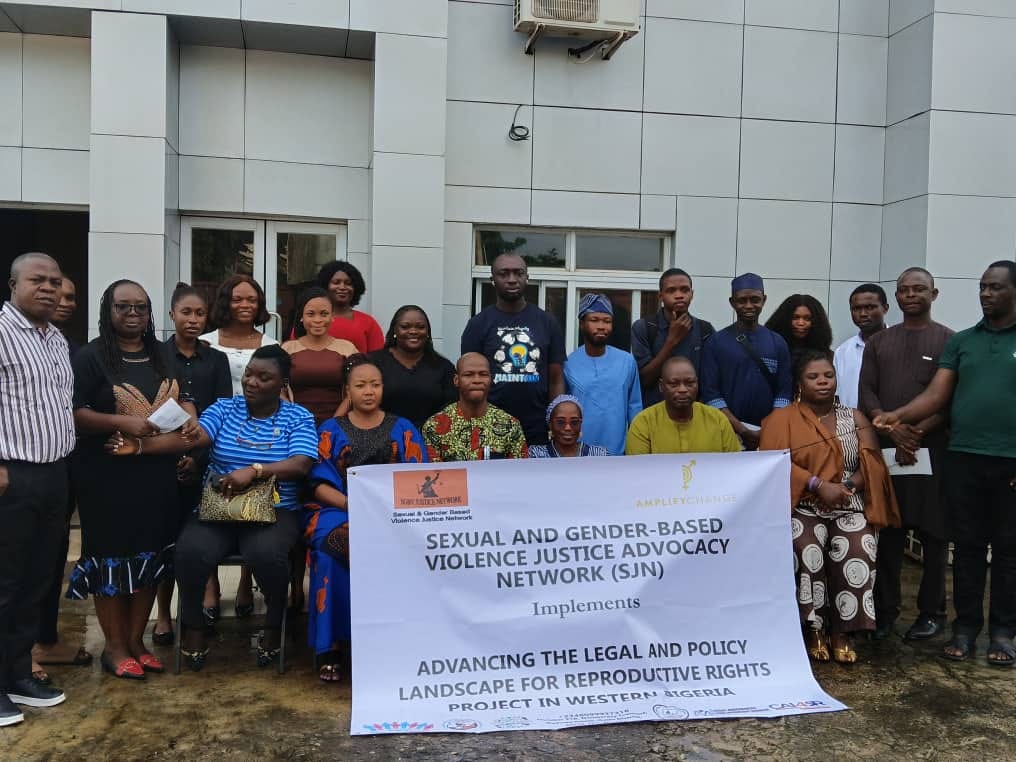
The Sexual and Gender-Based Violence Justice Advocacy Network (SJN) has trained journalists in Osun State on how to report sexual and reproductive health and rights (SRHR) and gender-based violence (GBV) accurately and ethically.
Participants at the training in Osogbo on Tuesday included journalists drawn from newspapers, radio and television stations across the state, as well as online platforms and content creators.
The training aimed to educate journalists on proper ways to report SRHR and sexual and gender-based violence (SGBV), focusing on appropriate words and terminology to prevent stigmatization and promote developmental journalism.
The program was organized by SJN in collaboration with the Community Advancement Initiative for Self-Reliance (CAI4SR), with support from AmplifyChange.
The core focus of the training was to equip journalists with relevant information, data, and knowledge to enable them to work with civil society organizations advocating for the advancement of the legal and policy landscape for reproductive rights in Southwestern Nigeria.
SJN National Coordinator, Mrs. Uneje Jerome, called on journalists to ensure accurate reportage of issues surrounding SRHR and SGBV, particularly matters relating to safe, legal termination of pregnancy, individual choice, and bodily autonomy.
She said the training was designed to strengthen participants’ capacity to report accurately, ethically, and responsibly on SRHR issues, while leveraging media platforms to amplify grassroots advocacy and align reporting with global best practices in reproductive health communication.
Uneje listed the expected outcomes to include building the capacity of journalists and content creators in rights-based reporting, improving understanding of SRHR frameworks, and promoting ethical, stigma-free coverage of sensitive reproductive health issues.
According to her, “This training specifically aims to ensure that SRHR issues are reported ethically using a human rights lens, particularly regarding the protection of survivors’ rights. Survivors here may include victims of SGBV, especially rape, as well as those dealing with mental and physical health issues.”
“It is essential to engage the media because if we do not, opposing parties will use media platforms to publicize their own narratives. We must collaborate with the media to build a movement; we need media professionals who can assist us because we cannot be everywhere at all times,” Uneje added.
The Executive Director of CAI4SR, Mrs. Eni Ayeni, described the media as a critical partner in countering misinformation and building a movement for reproductive rights and justice.
Ayeni appealed to journalists and content creators to team up with civil society organizations and advocacy groups working to advance SRHR and address SGBV.
The facilitator, Mr. Olusola Taiwo, urged media professionals to familiarize themselves with the national guidelines on safe termination of pregnancy, noting that these guidelines have been domesticated by several states, including Ogun, Osun, Akwa Ibom, and Anambra.
Mr. Olusola noted that the training aimed to enlist the media to help raise awareness of the guidelines and discourage resort to unsafe practices, which often lead to severe medical complications.
At the conclusion of the workshop, participants pledged to educate members of the public through ethical reportage and responsible journalism on the reproductive health issues discussed during the session.
READ ALSO:
- Abducted family cries out as kidnappers demand ₦300m
- Viral ₦20,000 extortion video lands Ekiti policemen in disciplinary trouble
- Bandits kill immigration officer, set corpse ablaze
- NYSC member killed as trailer crashes into vehicles in Ibadan
- Patient’s relative stabs hospital staff, workers begin strike
