

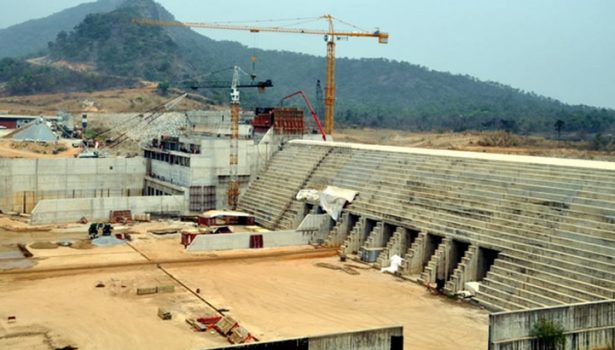
Former Vice President Atiku Abubakar has accused the APC Campaign Council of deliberately distorting the outcome of the Mambilla arbitration, saying the ruling party has taken a tribunal award, amputated its legal meaning, stuffed the gaps with political propaganda and presented the result to Nigerians as a corruption verdict against him when no such verdict was delivered.

Atiku said the distortion rests on a false and intellectually lazy assumption: that because he served as Vice President in the Obasanjo administration, every action taken by that government must automatically be attributed to him. History itself demolishes that argument. When the controversial third-term project arose under the same Obasanjo–Atiku administration, Atiku was not treated as a participant merely because he was Vice President. He opposed it openly and stood against it. Nigerians understood then, as they should understand now, that serving in an administration does not make every office holder personally responsible for every policy, scheme or decision associated with that government.
“The same principle applies to Mambilla,” Atiku said. “I was not a member of the technical process that evaluated the competing proposals and recommended Sunrise. I did not sit on the procurement panel. I did not award the contract. So anyone alleging that I manipulated that process has a simple responsibility: show the instruction I gave, show the intervention I made, and show the paragraph of the tribunal award where that corrupt influence was found.”
In a statement issued by his Senior Special Assistant on Public Communication, Phrank Shaibu, Atiku challenged the APC to produce the exact portion of the final award where the tribunal found that he collected a $500,000 bribe, instructed former Power Minister Olu Agunloye to award the Mambilla contract to Sunrise, abused his office or participated in a corrupt conspiracy to procure the contract.
“There is no such finding,” Atiku said.
“What the APC has done is intellectually dishonest. It has converted suspicion into guilt, an unexplained transaction into a proven bribe, and an allegation canvassed before arbitrators into a verdict the arbitrators themselves never delivered. That is not an interpretation of the award. It is a political fabrication.”
Atiku said the facts should be stated without embellishment. The tribunal examined the $500,000 transferred by Leno Adesanya through China Castle Investments to Jennifer Douglas, rejected Adesanya’s explanation that it arose from a foreign-exchange transaction and expressed concerns about the absence of documentary evidence supporting that explanation.
But rejecting Adesanya’s explanation, Atiku said, is fundamentally different from finding that Atiku received a bribe or corruptly used his office to secure the Sunrise contract.
“The APC cannot manufacture the missing finding simply because the actual award does not provide the political conclusion it desperately wants,” Atiku said.
“Nigeria alleged before the tribunal that the transfer was connected to the disputed Mambilla contract. Sunrise and Adesanya denied that allegation. Adesanya offered an explanation which the tribunal did not accept. But an unsuccessful explanation by Leno Adesanya does not automatically become a corruption verdict against Atiku Abubakar.
“If the tribunal wanted to find that the $500,000 was a bribe paid to Atiku, it could have said so plainly. If it wanted to find that Atiku abused his office to procure the contract for Sunrise, it could have said so plainly. The APC cannot insert into an international arbitral award words and conclusions that the arbitrators themselves did not put there.”
Atiku also rejected the assertion that he “chose to stay away” after supposedly being summoned by the tribunal, describing the claim as another example of an allegation being expanded beyond what the reported record establishes.
“For the avoidance of doubt, I was not a party to the arbitration and I did not testify before the tribunal. The reported contents of the award do not establish that the tribunal summoned me, ordered me to testify or found that I disobeyed any directive to appear.
“There is a world of difference between a party to an arbitration attempting to secure somebody’s testimony and the tribunal itself summoning that person to appear. Those distinctions matter. The APC cannot erase them simply because doing so makes for a more convenient headline.”
Atiku noted that former Presidents Olusegun Obasanjo and Muhammadu Buhari testified on behalf of Nigeria, while former ministers Babatunde Fashola and Suleiman Adamu were also among those who participated in Nigeria’s defence.
He said their participation was a matter of record, but their appearance could not reasonably be transformed into evidence that Atiku himself was summoned by the tribunal and refused to appear.
READ ALSO:
- FG directs MDAs to remit revenues due to govt promptly
- How to enjoy your spouse (1), by Bosede Ola-Samuel
- Tiwa Savage Responds As Victor AD Apologises Over Unreleased Collaboration
- Moffi delighted to help Hamburg beat Hoffenheim
- Femi Adebayo Explains Inspiration Behind Newly Launched Media Hub
Atiku further said the APC’s attempt to portray him as though he had been adjudged liable in the arbitration ignores another elementary fact: the proceedings were between Sunrise Power and Transmission Company Limited, Leno Adesanya and the Federal Republic of Nigeria.
The tribunal dismissed Sunrise’s claims and ordered Sunrise and Adesanya to reimburse Nigeria for 75 per cent of its legal fees and expenses. No damages, costs or other liability were imposed on Atiku Abubakar.
Atiku said the contrast with President Bola Tinubu’s own United States court record could hardly be clearer.
“In my case, my accusers are struggling to turn an allegation considered in the Mambilla arbitration into a finding the tribunal has not been shown to have made. In President Tinubu’s 1993 United States case, however, the matter did not end with an allegation. It moved from allegation to settlement, and from settlement to a formal judicial decree.
“On October 4, 1993, Judge John A. Nordberg of the United States District Court for the Northern District of Illinois ordered the forfeiture of $460,000 held in an account in Bola Tinubu’s name, stating that the funds ‘represent proceeds of narcotics trafficking or were involved in financial transactions’ in violation of 18 U.S.C. §§1956 and 1957.
“The legal distinction must still be respected. It was a civil forfeiture proceeding against property, not a criminal conviction of Bola Tinubu personally for drug trafficking. But there was a decree. There was a forfeiture. There was an operative judicial order.”
Atiku said that distinction makes the attempt to manufacture a verdict against him particularly revealing.
“Those now blurring the line between allegation and finding should understand that distinction better than most. In Mambilla, they point to an allegation and demand that Nigerians treat it as guilt. In the United States case, there is an actual court decree, and yet the law still requires careful language about precisely what was, and what was not, decided.
“That is how the law works. The same standard must apply to everyone. Do not convert allegation into conviction. Do not transfer findings from one person to another. Do not manufacture a verdict where none has been produced.
“If the Mambilla tribunal made against Atiku Abubakar anything remotely comparable to the formal judicial decree entered in the Tinubu forfeiture case, then let his accusers stop the political theatre, produce the exact paragraph and allow Nigerians to read it for themselves.”
He said the central question in the Mambilla controversy remained narrow and should not be buried beneath campaign rhetoric.
“The question is not whether the $500,000 transaction deserved scrutiny. It did, and it was scrutinised. The question is whether the tribunal took the further step the APC now attributes to it and found that Atiku Abubakar received a bribe and corruptly influenced the award of the Mambilla project.
“Let the APC produce that finding.
“Let it identify the paragraph where the tribunal found that Atiku solicited a bribe.
“Let it identify the paragraph where the tribunal found that Atiku received $500,000 in exchange for influencing the Mambilla contract.
“Let it identify the paragraph where the tribunal found that Atiku instructed Olu Agunloye to award the contract to Sunrise.
“And let it identify the paragraph where the tribunal found Atiku culpable of corruption in relation to the project.
“These are not questions of political opinion. They are questions of record. They have factual answers. If the APC has those paragraphs, it should publish them in full and allow Nigerians to read the words of the tribunal themselves.”
Atiku said the controversy should not be used to distract Nigerians from the issues on which the 2027 election will ultimately be decided, including the cost of living, jobs, security and the consequences of the Tinubu administration’s economic policies.
“Nigerians can read. Nigerians can distinguish allegation from adjudication. And Nigerians should not be asked to surrender their judgment to campaign propaganda.
“If officials of the Tinubu administration insist on precise legal distinctions when discussing the President’s own United States civil-forfeiture record, then they should have no difficulty applying precisely the same discipline to the Mambilla award. They cannot demand legal precision for themselves and abandon it when talking about their opponents.”
Atiku said until the APC produces the portions of the award it claims support its accusation, it should stop dressing campaign allegations in the robes of an international tribunal.
“An allegation is not a finding. Suspicion is not proof. The rejection of one man’s explanation is not the conviction of another man.
“And no amount of political repetition can write into an arbitral award a verdict that the tribunal itself did not deliver.”
